The Project: Vernacular Branding
Languages, Colours, and Cultures of Indian Identity
The project Vernacular Branding begins with an impulse to celebrate and document India’s visual culture — the ways our streetscapes, everyday objects, and visual media create their own distinctive aesthetics.
Inspired by the tradition of coffee-table books, it imagines a new space where vernacular design and branding in India can stand alongside architecture, cinema, or textiles — as a subject worthy of curation, reflection, and pride. Our signs, posters, packaging, and street graphics — improvised and omnipresent — are not just functional, but also cultural expressions that deserve to be seen and remembered.
The project also opens up larger conversations through curiosity. India’s streetscapes are alive with colour and diversity, shaped by over dozens of languages and countless local traditions. By paying attention to these visual practices, Vernacular Branding invites readers to discover how design and branding in the vernacular medium carry meaning, creativity, and identity in everyday life.
Why this matters
From hand-painted signboards and matchbox labels to political posters and festival hoardings, branding in India is not only commercial — it is cultural. It carries memory, identity, and storytelling. By documenting and reflecting on these practices, we hope to:
- Celebrate the ingenuity of everyday makers, from street painters to small shopkeepers.
- Expand the discourse of design beyond the corporate and the elite.
- Connect communities of designers, students, and citizens who care about how identity is shaped in public space.
- Provoke conversations about how these vernacular practices evolve in a global and digital age.
What the project includes
The Book
At the heart of this project is the book Vernacular Branding, authored by Prof. Bhuleshwar “Arun” Mate and Kaushambi Mate. Part archive, part memoir, and part reflection, it draws from decades of design practice, teaching, and observation. It treats the streets as galleries and everyday branding as acts of identity.
The book is conceived not only as a resource for artists and designers but also as an entry point for wider audiences — to popularize “vernacular branding” as an idea in its own right, distinct from architecture or marketing.
The First Micro-Exhibition
As the book comes to life, the project also takes form in public space. The humble beginning, still being finalized, is to be hosted at GCAD, Nagpur.
It will showcase selected works and open dialogue between documentation, design practice, and the lived reality of India’s streets.
We see this as the first of many such exhibitions. Over time, we hope to extend them to other cities and contexts, allowing Vernacular Branding to travel, evolve, and keep inviting new voices into the conversation.
Our vision
At its heart, Vernacular Branding is about seeing India differently: to treat the streets as galleries, to notice how identity is improvised in paint, colour, and script, and to value these expressions as cultural heritage in their own right.
This project is an invitation — to look, to reflect, and to participate.
DISCLAIMER ON IMAGES
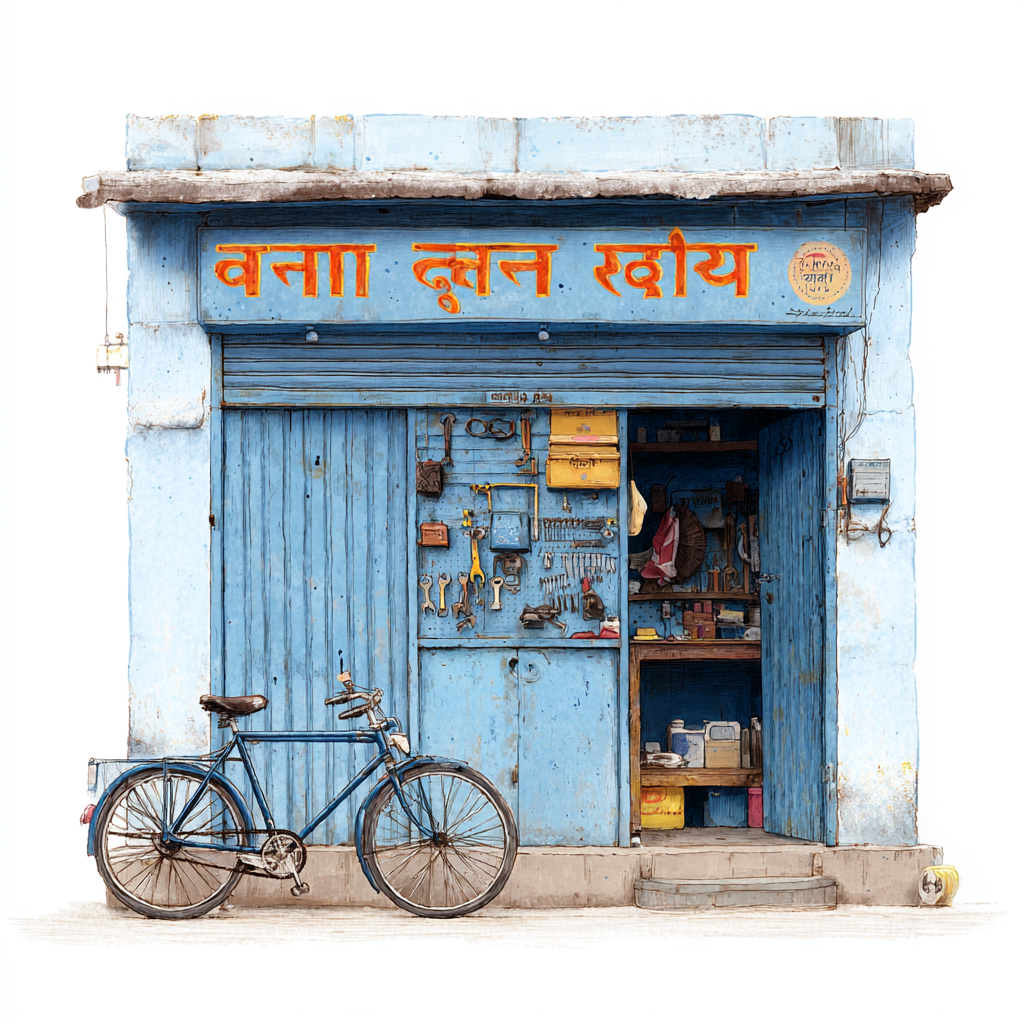
The visuals shown here are conceptual references only — included to set the mood and scope of the project. The final book and exhibitions will draw from lived practices, original contributions, and documented archives. All published works will be fully credited to the contributing artists.
 Vernacular Branding